

Recently, M247 Global participated in the event "World Telecommunication and Information Society Day 2026 – Who is accelerating Romania's digital transformation in the next 1,000 days?", organized by Comunicații Mobile magazine in partnership with the Digital Transformation Council. During the event, Bogdan Gavriluță, Director of International Sales at M247 Global, highlighted an increasingly evident reality for the digital infrastructure industry: the data center market is going through an accelerated maturation process, and IT infrastructure is no longer a support element, but a critical factor for companies' operational continuity.
A Conversation About the Future of Digital Infrastructure
The latest edition of the conference organized by Comunicații Mobile magazine brought together leaders from telecom, administration, technology, and infrastructure for an extensive dialogue about Romania's digital future. Discussions revolved around a vital question: what will the next stage of digital transformation look like at a time when AI, cloud computing, and data centers are no longer mere technologies, but the core infrastructures of the global economy?
In parallel, the organizers proposed an ambitious temporal perspective—the next 1,000 days - as a critical window during which infrastructure decisions will directly influence the development pace of Romania's digital economy.
The New AI Revolution: From Technology to Civilizational Infrastructure
One of the defining ideas of the entire conference was the shift in perspective regarding artificial intelligence. AI is no longer viewed as a simple technology, but as a fundamental infrastructure with a systemic impact on society. In the speakers' interventions, the comparison to electricity was recurring: just as electrification completely redefined industries two centuries ago, artificial intelligence has the potential to rewrite how the economy, administration, and even social life operate.
Following this logic, data centers become the physical infrastructure of the new digital economy—the spaces where intelligence is "produced" and distributed. From this perspective, the question is no longer whether AI will be adopted, but how the infrastructures supporting it will be built and orchestrated.
The ITU Message: Speed of Action Defines Digital Leaders
A landmark moment of the event came from the International Telecommunication Union (ITU), an organization with over 150 years of history in the global coordination of telecommunications.
The delivered message clearly captured the current direction of the industry: the world is entering a phase of accelerated transformation, where AI simultaneously influences communication networks, cloud infrastructure, and administrative systems.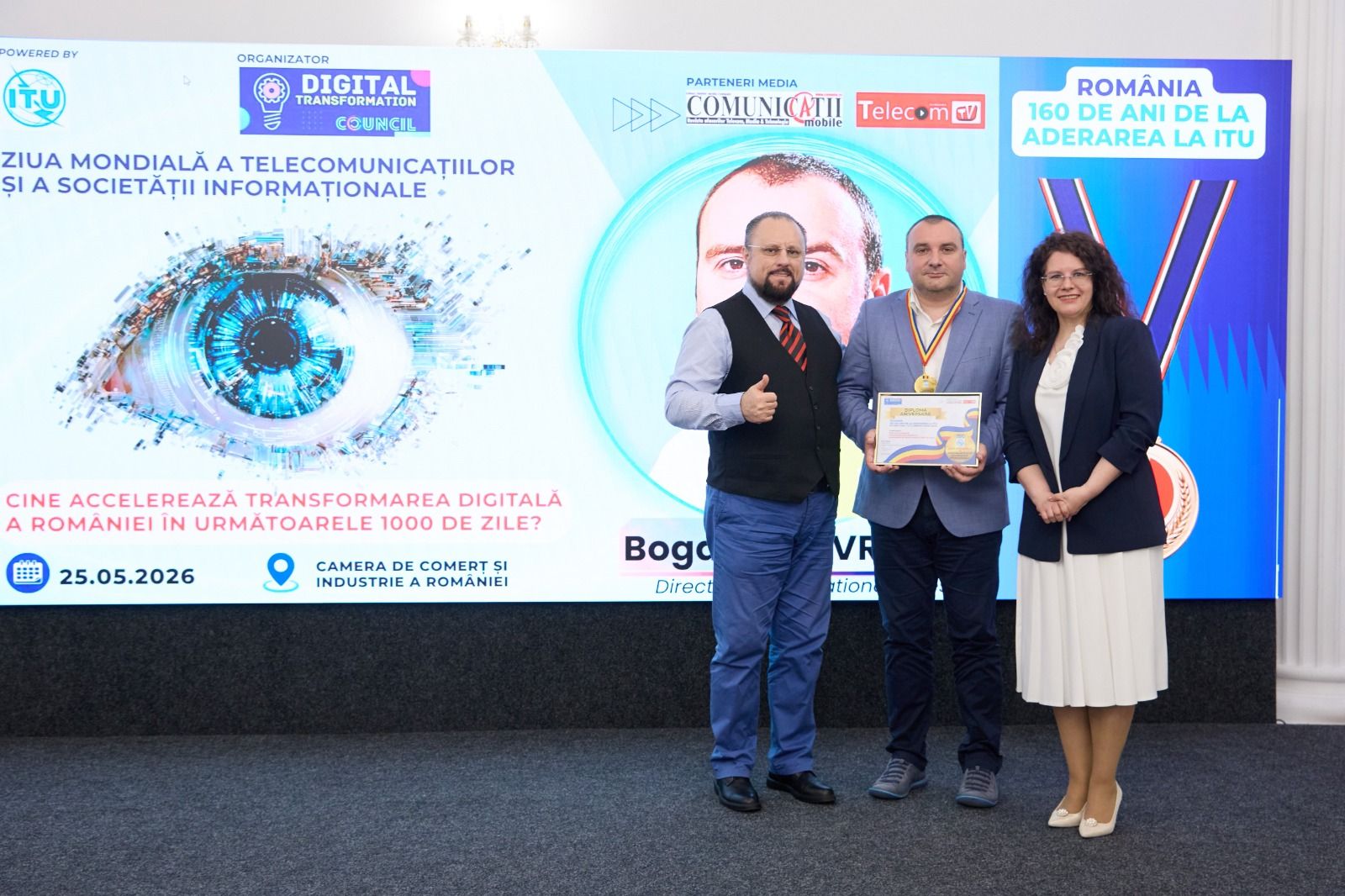 In this new context, digital infrastructure can no longer be treated as a secondary technological layer. Telecom networks, data centers, and cloud platforms are becoming strategic assets, and AI is acting as a multiplier of economic and geopolitical competitiveness. The conclusion was unequivocal: the difference between leaders and followers will be determined by the speed of action in adopting and scaling these technologies.
Perspectives from Infrastructure Operators: Resilience Above All
From the perspective of a global infrastructure operator, Bogdan Gavriluță brought the discussion closer to operational reality.
If in the past, conversations about data centers focused on capacity and connectivity, today the focus has shifted toward resilience, uptime, and the infrastructure's ability to support the ever-growing volumes of data generated by AI applications.
In this new reality, infrastructure is no longer just technical support, but a functional prerequisite for the digital economy. Any disruption, no matter how small, translates directly into operational losses and impacts business continuity.
Local Geographic Resilience: The Bucharest – Brașov Axis
A concrete example of this philosophy is the geographic resilience architecture developed in Romania.
- The Brașov Node: The infrastructure is designed as a strategic point of continuity. The data center, with a capacity of 40 racks, is primarily used for Disaster Recovery (DR) and Business Continuity (BC) scenarios, as well as acting as a hub for the local technological ecosystem.
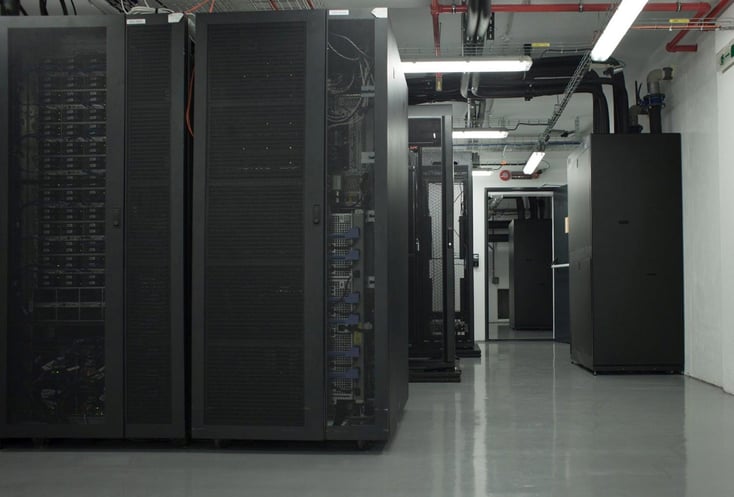
- The Bucharest Node: The two data centers (DC3 and DC4) form the main core of operational capacity, featuring approximately 250 racks and full redundancy at the power and cooling levels.
Together, the two locations create a distributed architecture that reduces operational risks and ensures service continuity even in complex scenarios.
Global Scaling and Expansion
Internationally, M247 Global already operates an extensive infrastructure built around a model of constant growth and multi-regional connectivity.
- Current Footprint: The network includes over 55 Points of Presence (PoPs), supported by an IP MPLS backbone covering both Europe and other global regions, featuring carrier-grade connections ranging from 100–400 Gbps.
- Future Strategy: Development remains aggressive yet controlled, aiming to expand by 2–3 new PoPs annually and consolidate a multi-continental presence. A significant step in this direction is the planned expansion into South Africa, which will become a new strategic point in the global connectivity architecture.
Infrastructure Becomes a Competitive Advantage
With over two decades of experience and a solid presence in the global digital infrastructure ecosystem, M247 Global is solidifying its role as a critical infrastructure provider in an economy dominated by AI and data. Our proposition is built around three clear strategic directions: sovereign AI infrastructure, a low-latency global network, and 24/7 available operations.
Ultimately, the message delivered by M247 Global at the event was simple yet essential: in the new digital economy, competitive advantage will not be driven solely by software or innovation, but by the performance and availability of the IT infrastructure that makes their operation possible.