

In March 2025, a fire at an electrical substation shut down Heathrow Airport for almost a full day. Over 1,300 flights were cancelled. Roughly 300,000 passengers were affected. Global headlines called it a "power outage," but the real story was more uncomfortable than that.
It wasn't the servers. It wasn't the applications. It wasn't even a lack of redundancy on paper — Heathrow, like most critical infrastructure operators, had backup power arrangements in place. The failure was in the switchover: the time and complexity involved in moving load to redundant sources when the primary one disappeared without warning. And the investigation that followed uncovered something even more telling — a known issue with the substation equipment had existed since 2018, quietly waiting to become a crisis.
That's the pattern behind almost every major infrastructure failure: the bottleneck is rarely where anyone was looking. Teams plan for CPU shortages and storage capacity. What actually stops the business is usually something further down the stack — power, cooling, networking, or the operational plumbing nobody budgets time to inspect until it breaks.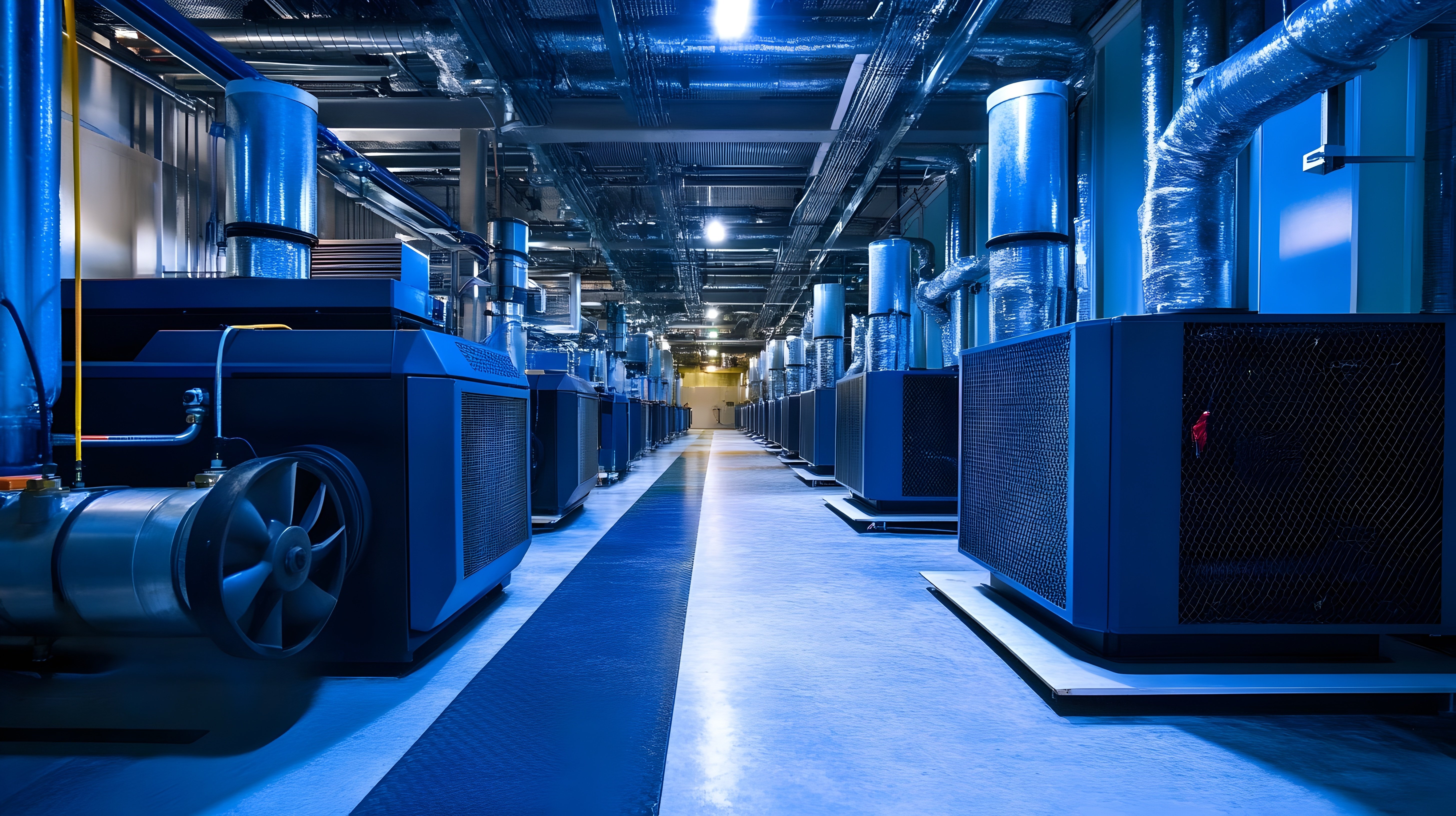 For IT and infrastructure leaders, Heathrow is a useful reminder that resilience isn't a checkbox. It's a continuous discipline, and it usually fails quietly, long before it fails visibly.
The Infrastructure Bottlenecks Hiding in Plain Sight
A few of the constraints that most often catch organizations off guard:
Power availability. Many corporate datarooms or server roooms have plenty of rack space but not enough usable power. A team invests in new high-density or GPU hardware, only to discover the racks can't deliver the +30 kW required to run it. Power, not floor space, becomes the real capacity ceiling — and it's the hardest one to expand quickly, since utility upgrades and substation work can take months or years, not weeks.
Cooling capacity. Modern compute, especially AI workloads, generates far more heat than legacy infrastructure was designed to handle. Ten years ago, a dual-socket server consumed approximately 250–300 W for the processors alone, resulting in a typical rack power density of 5–8 kW. Today, a dual-socket server can require 700–1,000 W for the processors alone, pushing rack power density to an entirely new level.
Hot spots, inadequate airflow, and cooling systems sized for yesterday's density become the deployment blocker before compute ever does.
|
Year |
Processor |
TDP |
|
2014 |
Intel Xeon E5-2699 v3 (18 nuclee) |
145 W |
|
2015 |
Intel Xeon E5-2680 v4 (14 nuclee) |
120 W |
|
2017 |
AMD EPYC 7601 (32 nuclee) |
180 W |
|
2022 |
Intel Xeon Platinum 8490H |
350 W |
|
2023 |
AMD EPYC 9754 (128 nuclee) |
360 W |
|
2024 |
Intel Xeon 6980P (Granite Rapids) |
500 W (modele high-end) |
Network architecture built for the wrong traffic pattern. Most enterprise networks are designed for user-to-application traffic within a single site or region. But in a distributed architecture spanning multiple data centers or cloud regions, AI, virtualization, and microservices generate massive server-to-server (“east-west”) traffic that crosses racks, clusters, and sometimes entire regions — a pattern that was never part of the original design. In a typical scenario, a company running workloads across three regional data centers (for example Frankfurt, Amsterdam, and Warsaw) assumes most traffic will remain local and that only application-level requests will traverse inter-site links. However, once AI training or distributed analytics is introduced, every node may need to exchange model parameters or datasets continuously, turning what was expected to be <20% inter-site traffic into 60–80% sustained east-west traffic across regions.
Even a well-provisioned gigabit interconnect between sites can become saturated, leading to queueing, packet loss, and unpredictable latency spikes. The result is not a total outage, but a severe performance collapse: GPU clusters drop below 40–50% utilization, query times triple, and workloads that looked perfectly balanced in design documents degrade dramatically once real cross-region synchronization begins..
Storage throughput, not storage capacity. Terabytes are cheap. IOPS are not. AI and analytics workloads need sustained, low-latency throughput — and when storage can't keep up, expensive compute sits idle waiting for data. Backup and recovery windows. Infrastructure tends to grow faster than the ability to protect it. A backup window that comfortably handled 100 TB in four hours can quietly stretch to 12 hours as data volumes triple. The impact goes beyond backup jobs: an organization with a four-hour Recovery Time Objective (RTO) may discover that restoring 150 TB of production data actually takes 18–24 hours, making disaster recovery plans impossible to meet in practice. At the same time, replication links that once synchronized 3 TB of daily changes over a 10 Gbps connection can become permanently backlogged when daily data changes grow to 12–15 TB. Organizations often discover these bottlenecks only during a major outage or a full disaster recovery test, when recovery targets that looked achievable on paper prove impossible under real-world conditions.
WAN and connectivity limits. As organizations lean further into cloud and hybrid models, the bottleneck often shifts outside the data center entirely — into MPLS saturation, congested internet circuits, or high latency to cloud regions. Cloud performance becomes network-limited rather than compute-limited.
None of these show up in a straightforward capacity report. They show up during an incident, or during a scale-up, when it's already expensive to fix them.
Why This Keeps Happening
The common thread across all of these is imbalance. Organizations invest heavily in compute — more servers, more GPUs, more storage — while the surrounding infrastructure (power, cooling, network, backup, connectivity) is left to catch up later. One weak link is enough to cap the return on everything else. A rack full of GPUs delivers nothing if the power circuit can't feed it, the cooling can't sustain it, or the network can't move data in and out fast enough to keep it busy. And because these components are usually managed by different teams, under different budgets, on different timelines, nobody owns the full picture. That's exactly the gap that turns a "known issue since 2018" into a national headline seven years later.
Where M247 Global Fits
This is precisely the problem M247 Global is built to solve. Rather than treating power, cooling, connectivity, cloud, and business continuity as separate line items handled by separate vendors, M247 Global delivers end-to-end digital infrastructure solutions — one provider, one contract, one point of contact — anchored by a Tier III data centre in Bucharest with full disaster recovery in Brașov, and backed by 24/7/365 expert support.
A few ways this directly addresses the bottlenecks above:
- Power and density constraints are resolved through colocation with customizable, high-density power configurations — from shared racks to fully dedicated deployments — so hardware investments aren't stranded by insufficient power.
- AI and compute-heavy workloads are supported through AI-ready infrastructure: GPU-powered nodes configured to the workload and integrated with leading AI frameworks, avoiding the "idle GPU" problem caused by an unbalanced environment.
- Network bottlenecks are addressed through a global IP MPLS network with dozens of points of presence and dual-route redundancy on every connection.
- Backup, recovery, and the exact kind of switchover failure that stopped Heathrow are covered through DRaaS — cloud-based business continuity engineered for rapid recovery, not a redundancy plan that only works in theory.
- Cyber and DDoS exposure, an increasingly common trigger for cascading infrastructure failures, is managed through Security services built with Fortinet and Corero.
The goal isn't just uptime on a single component. It's a balanced infrastructure where power, cooling, network, storage, cloud, and resilience are designed and managed together — so the bottleneck that eventually surfaces isn't the one nobody was watching.
Your business never stops. With 99.99% uptime, proactive monitoring, and a team on call around the clock, M247 Global is built so the next Heathrow doesn't happen on your infrastructure.
FAQ 1: What was the real cause of the Heathrow Airport shutdown?
The Heathrow incident in March 2025 was triggered by a fire at an electrical substation, but the deeper issue was not simply a power outage. The main failure occurred during the switchover to backup power systems. Although redundancy existed on paper, the transition was not fast or seamless enough to maintain operations. The investigation also revealed that equipment issues at the substation had been known for years, highlighting how hidden risks often remain unaddressed until they cause major disruption.
FAQ 2: Why do infrastructure bottlenecks usually appear in unexpected places?
Most organizations focus on obvious capacity constraints such as CPU, storage, or application performance. However, real-world failures often emerge in less visible layers like power delivery, cooling systems, network architecture, or backup processes. These components are frequently managed separately, which makes it easy to overlook how they interact under stress. As a result, the weakest link often becomes visible only during an incident or major scale-up event.
FAQ 3: How does network design become a bottleneck in modern distributed environments?
Traditional networks are built for user-to-application traffic within a single location. In contrast, modern workloads — especially AI, virtualization, and microservices — generate large volumes of server-to-server (“east-west”) traffic across data centers and cloud regions. In distributed setups spanning multiple sites, this can quickly saturate interconnects, increase latency, and reduce compute efficiency. Even well-provisioned links can become a limiting factor when traffic patterns shift unexpectedly.
FAQ 4: How can organizations prevent hidden infrastructure bottlenecks like those seen at Heathrow?
Preventing hidden bottlenecks requires a holistic view of infrastructure rather than isolated optimization of compute or storage. Power, cooling, networking, backup, and disaster recovery must be designed to scale together, not independently. Continuous testing of failover mechanisms, regular capacity reviews, and alignment between infrastructure teams are essential. Providers like M247 Global address this by integrating compute, connectivity, and resilience into a unified infrastructure model rather than treating them as separate layers.