

Digital sovereignty is becoming a strategic priority for businesses and governments alike. As geopolitical tensions reshape international relationships and artificial intelligence drives new infrastructure demands, organisations must reconsider how much control they have over the technologies, data and service providers on which they depend.
These challenges were at the centre of The Sovereign Stack: Software, Infrastructure and Power in a Fragmented World, an event organised by BeeGlobal on 12 October 2026 in London, bringing together technology executives, entrepreneurs, investors and policymakers to discuss the future of digital infrastructure and international collaboration.
Hosted at UiPath's headquarters at 22 Bishopsgate, on the 50th floor, the event featured Pete Wakelam, CEO of M247 Global, among its speakers, alongside H.E. Laura Popescu, Ambassador of Romania to the United Kingdom, and representatives of the international technology and business community.
In her opening remarks, the Romanian Ambassador highlighted the strategic importance of the discussion, particularly in the context of the growing relationship between technology, economic security and geopolitical independence.
“Today's discussion on the sovereign stack comes at an important moment, as technology is no longer just about growth, but also about security, resilience and strategic independence.” H.E. Laura Popescu, Ambassador of Romania to the United Kingdom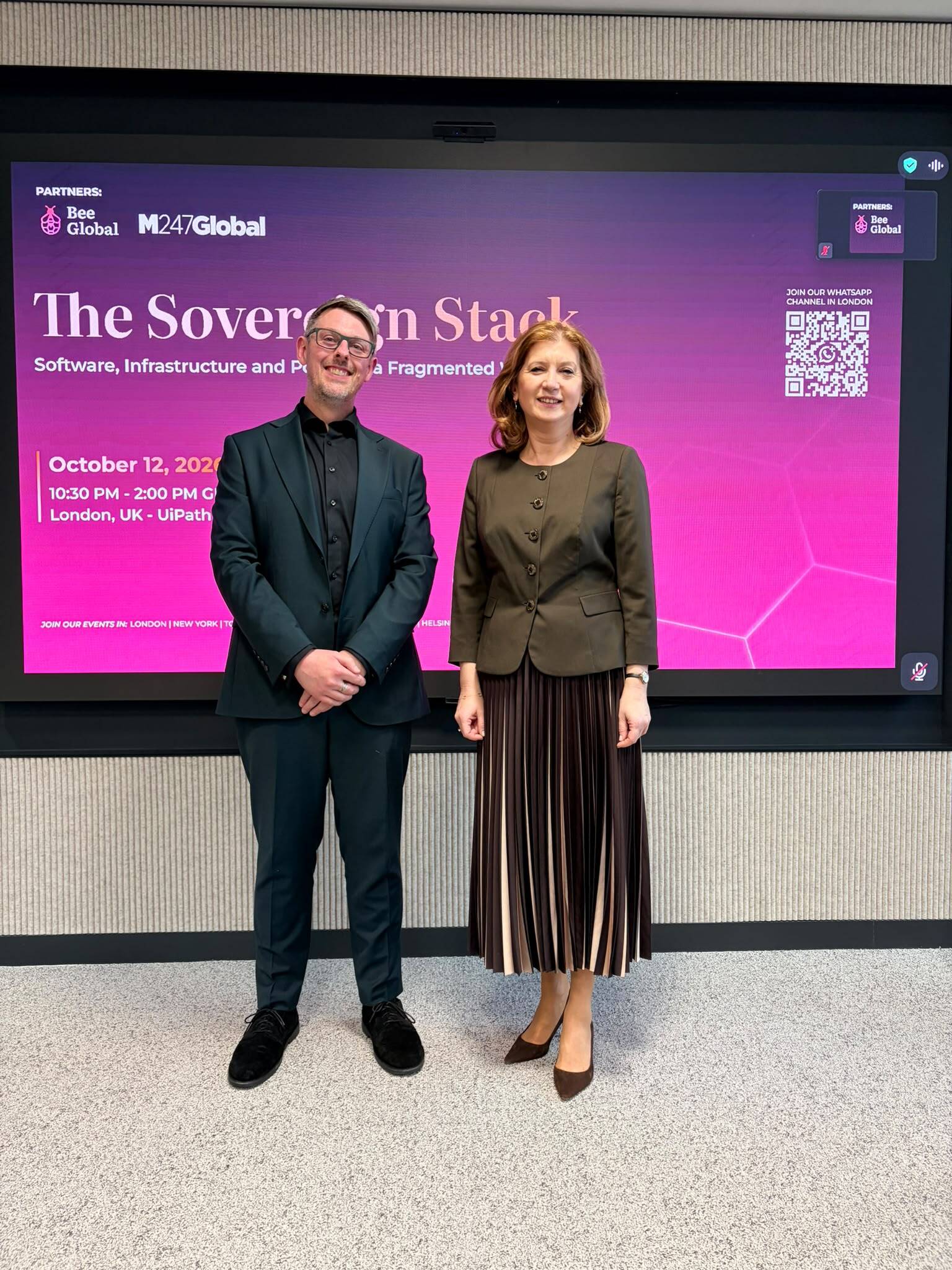 M247 Global also participated through Adriana Stanciu and Bogdan Gavriluță, who joined discussions with attendees and explored opportunities for collaboration.
Connecting Romanian innovation with international opportunities
Beyond the technology discussions, BeeGlobal London highlighted the growing potential for cooperation between the Romanian and British business ecosystems.
The presence of H.E. Laura Popescu gave the event an important diplomatic dimension, reinforcing the role of the Romanian Embassy in supporting entrepreneurs and technology companies seeking to expand internationally.
In her address, the Ambassador highlighted Romania's strong technology talent, engineering expertise and growing innovation ecosystem, emphasising how its access to the European single market and strategic position in Central and Eastern Europe and the Black Sea region create significant opportunities for investment and collaboration in artificial intelligence, cybersecurity, cloud computing and data centres.
“The UK brings technology, finance and innovation. Romania brings talent, engineering expertise and entrepreneurship. By combining these strengths, we can create new opportunities for investment, innovation and growth.” H.E. Laura Popescu, Ambassador of Romania to the United Kingdom
The Ambassador also emphasised the importance of the Romanian community in the UK, estimated at approximately 1.3 million people, and its contribution to British business, research, innovation and public services.
For BeeGlobal, the event represented an opportunity to connect these complementary strengths and encourage new partnerships between companies operating across both markets.
For M247 Global, an international provider of connectivity, cloud and data centre services, this dialogue is particularly relevant. Technology companies expanding internationally need more than access to new customers and investment. They also require reliable, secure and scalable digital infrastructure capable of supporting operations across different markets.
Pete Wakelam: Technological sovereignty is about managing dependencies
One of the central questions discussed at the event was what digital sovereignty actually means for businesses.
While sovereignty is frequently associated with data residency or locally hosted infrastructure, Pete Wakelam argued that the issue goes considerably further. Organisations must understand the dependencies built into their technology environments and the risks these dependencies create.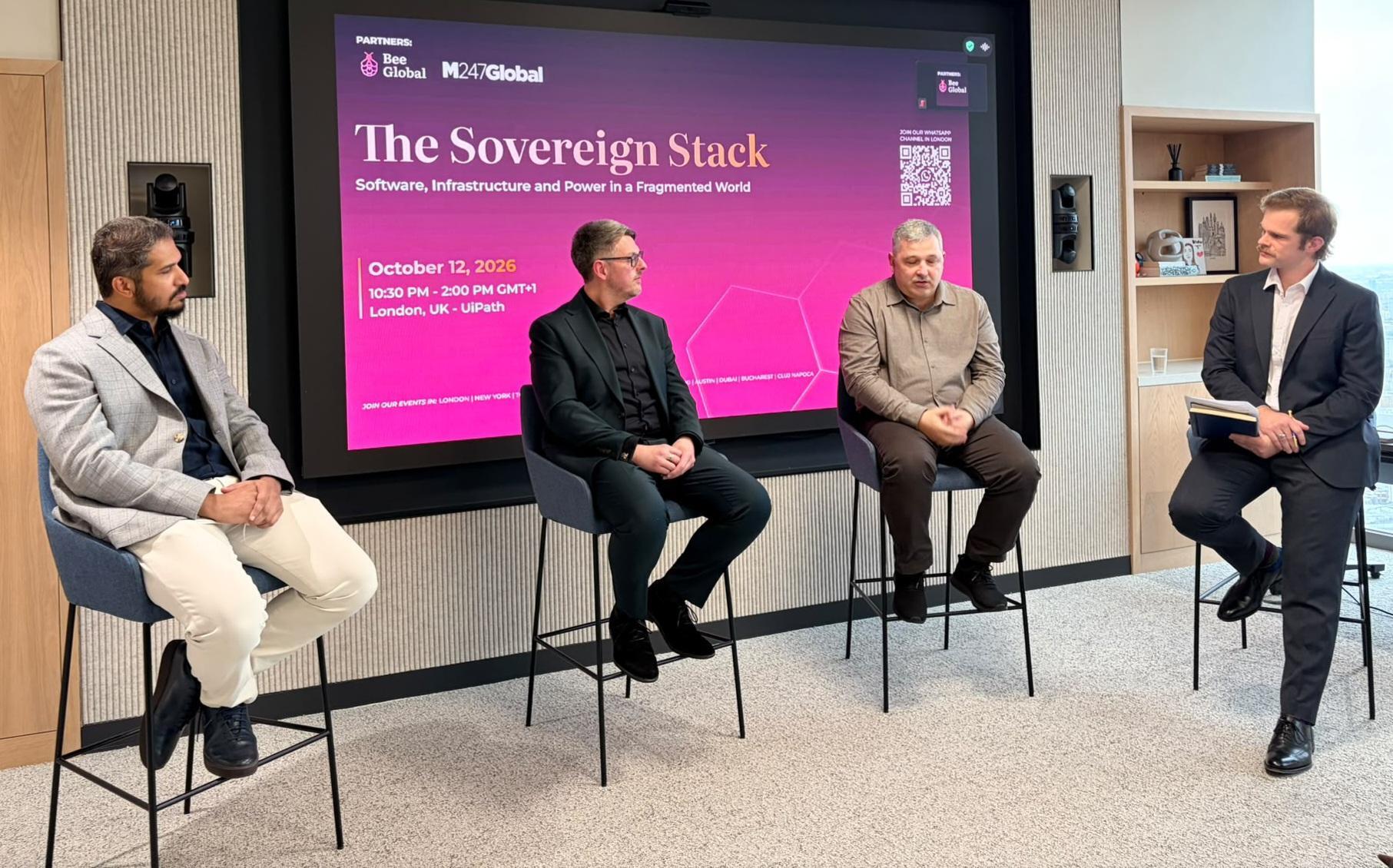 “Technological sovereignty is not about the technology ,it is about dependency and managing the risk that this poses. This has three layers: Build, meeting today's capacity demands and those of the future; Operations, the ability to assure ongoing availability of services; and Governance, the ability to set the rules and enforce them. Without these, we cannot be confident of being able to deliver public services or business solutions. Sanctions from outside the jurisdiction could prevent service operations if the core platform or intellectual property is owned in another jurisdiction.” Pete Wakelam, CEO, M247 Global
He identified three essential layers of technological sovereignty: Build, Operations and Governance.
Build refers to the ability to develop and maintain sufficient infrastructure capacity to meet current and future demand. Operations concerns the ability to ensure the continued availability of services, while Governance addresses who has the authority to establish and enforce the rules under which those services operate.
Together, these elements determine whether an organisation can genuinely control the digital services on which it depends.
This becomes particularly important in a fragmented geopolitical environment. Even when applications and data are hosted locally, an organisation may remain dependent on technologies, intellectual property or platforms controlled from another jurisdiction.
International sanctions, regulatory restrictions or changes in supplier relationships could therefore affect its ability to continue operating critical services.
For M247 Global, sovereignty is not necessarily about eliminating international technology relationships or owning every component of the infrastructure stack. It is about understanding where dependencies exist, assessing their consequences and retaining meaningful choices.
Business continuity and customer confidence: Two dimensions of digital sovereignty
Pete Wakelam emphasised that technological sovereignty requires businesses to rethink traditional Business Continuity Planning. Beyond operational failures and disaster recovery, organisations must now consider geopolitical risks, technology dependencies and the jurisdictions controlling critical infrastructure. This means conducting deeper supply chain due diligence and ensuring that trusted partners can deliver resilience in practice, not just on paper.
Simply having a documented recovery plan is no longer sufficient. Organisations need to verify that their partners can actually deliver the services and resilience they promise.
“I talked about business continuity and ensuring that you've got true supply chain visibility and that you've got trusted partners who you can test out. This is no longer about having a nice document in the background that you think is brilliant and hoping for the best if something happens. It's about genuinely testing and stress testing your partners so that, before you ever get to a scenario, you know you've really tested them in the process, you know they'll be there, they're genuinely working in partnership and you've got true transparency.” Pete Wakelam, CEO, M247 Global
At the same time, digital sovereignty is becoming a customer expectation. Businesses increasingly need to demonstrate where data is stored, who can access it and whether services can remain operational under changing geopolitical conditions.
“As consumers and end users become more aware of sovereignty, they will demand assurance from providers that sovereignty is inherent in their services. Businesses who do not adapt to these emerging risks will lose out to competitors who do.” Pete Wakelam, CEO, M247 Global
This distinction between assurance and insurance was another important point raised during the discussion. The objective is not merely to compensate organisations when something goes wrong, but to provide reasonable confidence that services can operate today, scale to meet tomorrow's demand and keep data and applications within the appropriate jurisdiction.
Businesses that can demonstrate this level of transparency and operational control may gain a competitive advantage as customers become more selective about their technology providers.
Infrastructure is becoming a strategic business decision
The discussions at BeeGlobal event in London highlighted how digital sovereignty, AI and cloud computing are making infrastructure choices increasingly strategic. Beyond performance and scalability, businesses must consider where workloads run, how data is protected and whether their technology architecture allows them to retain control and flexibility as requirements evolve.
For M247 Global, these challenges reinforce the importance of combining performance, scalability, portability and resilience. Through its portfolio of cloud, dedicated servers, colocation, connectivity and disaster recovery services, the company helps organisations align infrastructure decisions with their operational needs and long-term business objectives.
Building stronger connections across the technology ecosystem
BeeGlobal London also created opportunities for collaboration between the Romanian and British technology ecosystems, bringing together business leaders, investors, policymakers and diplomatic representatives. The participation of the Romanian Ambassador reinforced the importance of institutional support in developing international partnerships.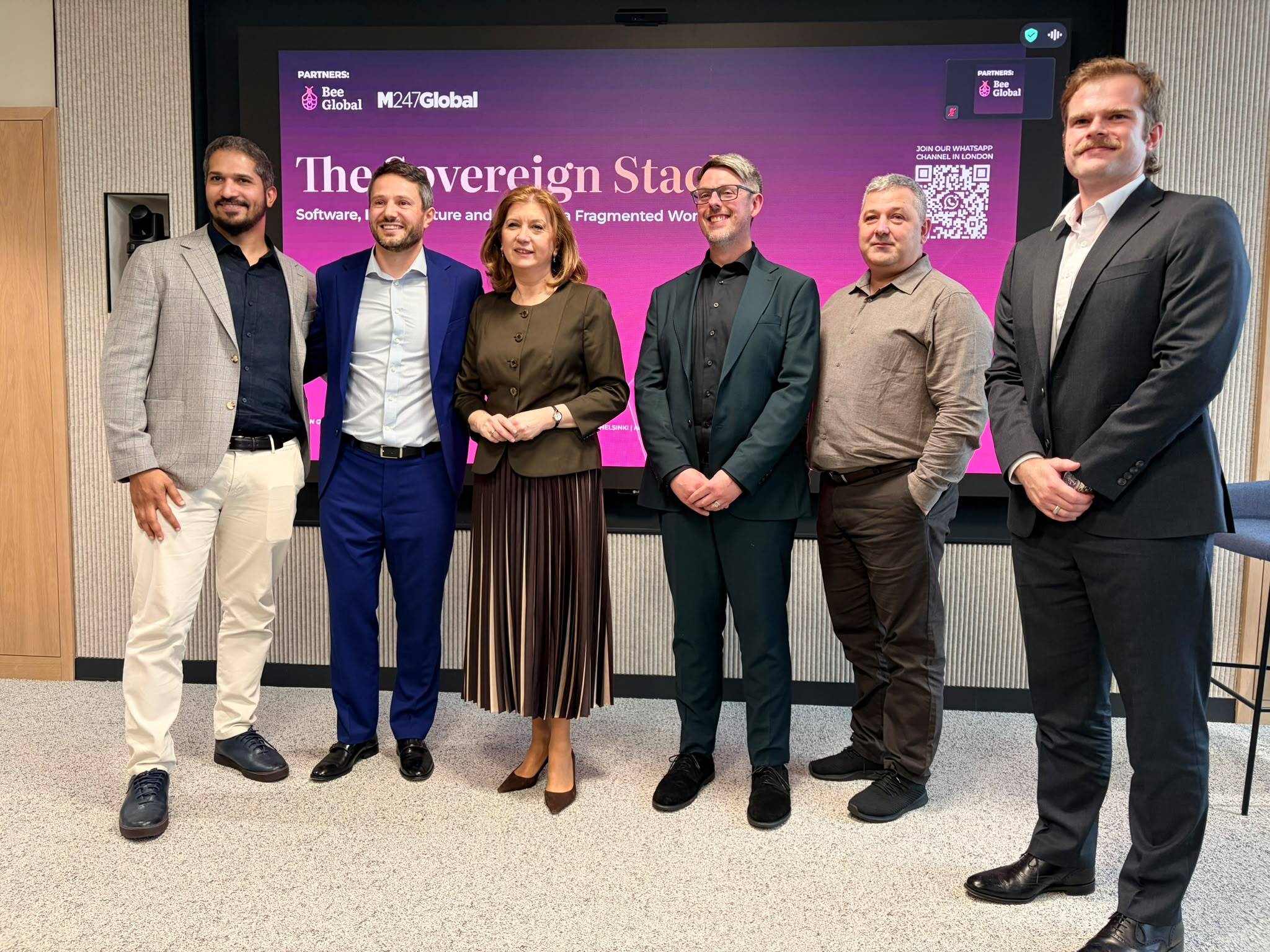 For M247 Global, the event was an opportunity to share its perspective on technological sovereignty and strengthen relationships with businesses navigating an increasingly complex digital environment.
The central message from London was clear: digital sovereignty is not about isolation, but about understanding critical dependencies, retaining control and building resilience. As AI adoption accelerates and cloud environments become more complex, M247 Global supports organisations in making infrastructure choices that preserve flexibility, ensure continuity and enable future growth.