

Techsylvania 2026 returned to Cluj-Napoca at the end of June as Eastern Europe's largest technology gathering, drawing more than 3,500 participants, 48 international speakers, and over 15 satellite events across the city. Among the keynotes that resonated most with the audience was Pete Wakelam's, CEO of M247 Global, who took the stage with a thesis that framed the rest of the conversation: AI Needs a Home — Europe Needs to be Ready to Win with AI Infrastructure.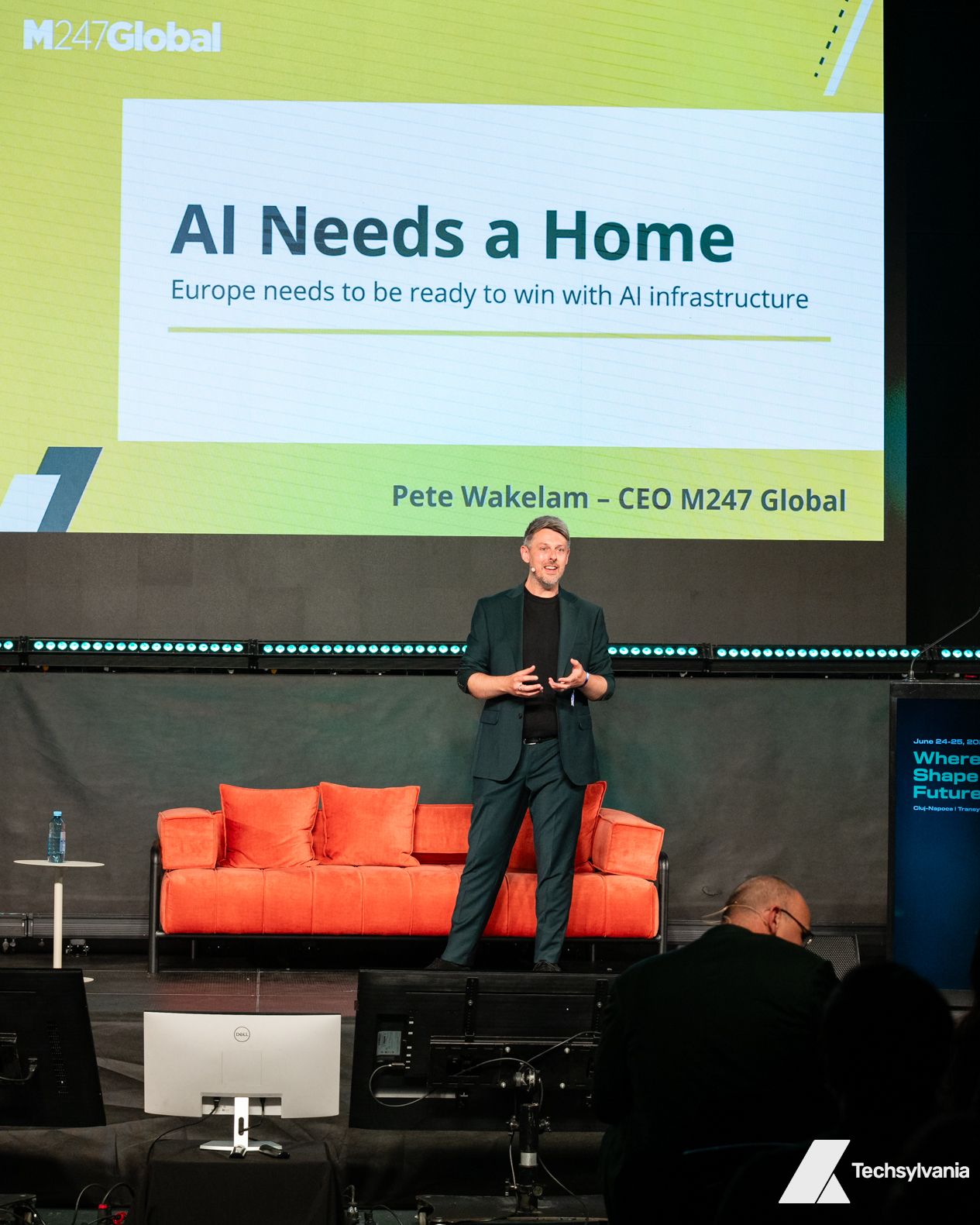 It was a fitting message for an event that has positioned itself as the connective tissue between Eastern European innovation and global capital, talent, and technology leadership. Founded in 2014 and now firmly established as the region's most influential platform for tech-driven growth, Techsylvania has built its reputation on pairing big-picture vision with hands-on substance. This year's edition leaned heavily into applied AI, elite product engineering, and the business strategies reshaping entire industries, backed by a new strategic partnership with Super Technologies and a record-setting roster of founders, investors, and operators. Beyond the main stage, the city itself became part of the experience, with a B2B Matchmaking Area, an Executive Lounge, and dozens of workshops and private sessions giving attendees from more than 30 countries room to actually do business, not just listen to it.
The Core Idea: Infrastructure as the Enabler
Pete Wakelam's central argument was straightforward but pointed: AI doesn't run on ambition alone. It runs on solid, secure, globally connected infrastructure, and that infrastructure is what determines who actually gets to compete in the AI economy, not just who talks about it.
He reframed the question many executives are still asking. It isn't "will AI change my industry," he argued, since for telecoms, cloud, and digital infrastructure that question has already been answered. The real question is how much of a disadvantage a business will face if its competitors adopt AI first.  Also Pete mentioned how he sees AI's role inside organisations. From his perspective, the AI conversation isn't about replacing people with technology — it's about finding the best tools to let people be brilliant at what they do. AI, in his framing, should empower teams: improving their performance and supporting their work, not eliminating jobes and roles.
Romania's Real Advantage
Rather than positioning Romania as a contender for frontier AI research, Wakelam made a different case: Romania's edge lies in execution. Building practical, enterprise-grade AI that makes real businesses run better is, in his view, where the country can credibly lead. It's a more grounded narrative than the usual "next Silicon Valley" framing, and one that lands well with an audience of operators rather than theorists.
He extended that into a broader regional argument: power, land, connectivity, and data centre capacity will decide who leads and who follows in the AI race. With Romania sitting at the heart of Central and Eastern Europe, he positioned the country as genuinely well placed to compete on exactly those fundamentals, particularly as Western European markets run into constraints on power availability and land for new builds.
Where M247 Global Fits In
Wakelam connected the macro argument back to M247 Global's own footprint, with points of presence across 56 data centres in 37 countries and 5 continents, plus disaster recovery infrastructure anchored in Bucharest and Brașov. He highlighted the company's continued investment in helping Romanian businesses scale, stay compliant, and reach global markets, including a new sovereign cloud platform purpose-built to host AI workloads in Romania and across Europe. That sovereignty angle, keeping sensitive workloads and data under European jurisdiction while still connecting outward to global markets, came through as a deliberate part of the company's pitch rather than a side note.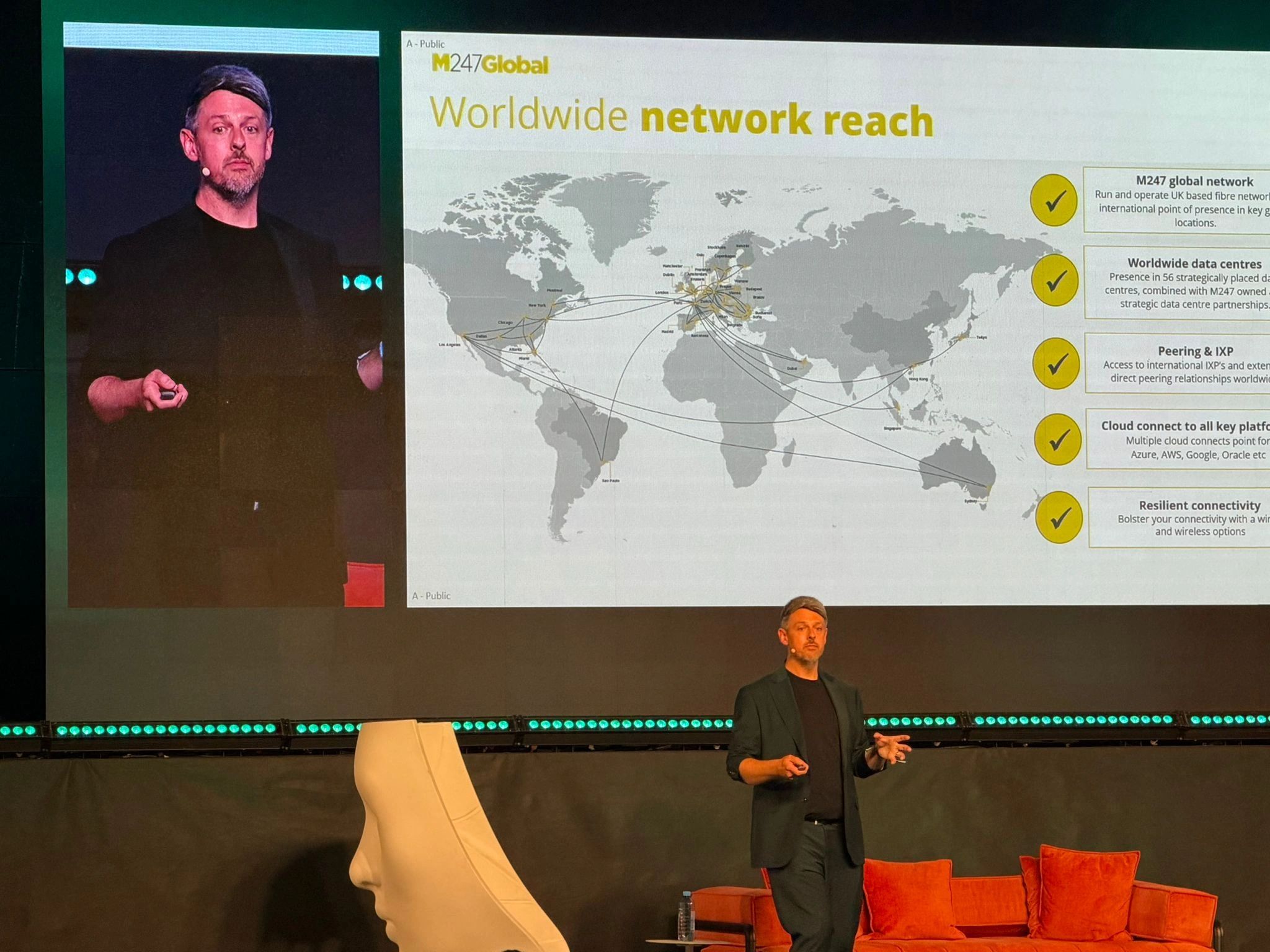 His closing point summarized the whole thesis: Romania's path to AI leadership isn't about building the next foundation model. It's about becoming one of the delivery engines that make the AI economy actually work. For a country whose tech sector has historically punched above its weight in delivery and engineering talent, that framing feels less like aspiration and more like a description of where the market is already heading.
The Wider Room
Pete Wakelam's keynote landed inside a broader Techsylvania programme that pushed well past pure AI hype. Panels under the EdTech Romania track tackled the responsibility that comes with deploying AI in education and the irreplaceable role of teachers in the face of new cognitive models, a useful counterweight to the infrastructure-and-scale conversation happening elsewhere on the agenda. Elsewhere, the Angel Arena gave startups a direct line to investors from the Transylvania Angels Network, with hackathon-backed teams like Tuto AI among the projects drawing attention. The event also attracted high-level political presence in Cluj-Napoca, underscoring the strategic weight the region is placing on scaling its IT industry.
Taken together, the day reinforced a theme that's becoming hard to ignore at events like this one: the AI conversation in Eastern Europe is maturing past pure enthusiasm and into questions of infrastructure, governance, and execution. M247 Global's message fit squarely into that shift, less about what AI could someday do, and more about what has to be built, today, for it to do it reliably and securely, in Europe. If Techsylvania's growing footprint is any indication, that conversation is only going to get louder, and Romania's infrastructure providers seem intent on being the ones answering it.